The Comics Code Authority
by Will Howard

(Credits: Dangerous Minds / Public Domain)
The Comics Code Authority: How to kill a medium with one easy moral panic
Mon 17 November 2025 18:00, UK
Literally every media advancement has been met with pushback by the “moral guardians” of the day.
Not just from the more famous examples like movies and video games, either. Believe it or not, one of the first moral panics about media came from the humble novel. You can find real-life newspaper articles written and published by real-life adults in the 17th and 18th centuries saying absolutely wild shit like “Novel-reading a cause of female depravity.” They said the same thing about theatre, they said the same thing about the cinema, but I would argue there was one medium that was targeted more than any other.
To the point where it did real-life harm to the medium that still hinders it to this day. Once comic books captured the imagination of a generation of kids in the 1940s and 1950s, moral crusaders fought back against them and fought back against them hard. Arguably, if the adults of the time put as much effort into actually understanding their kids as they did trying to police their pop culture, then the boomers wouldn’t be quite the mess they are today. Loathe though I am to be fair to these freaks, comics in the 1940s were a phenomenon worth investigating.
You might think that with caped heroes colonising multiplexes the world over, the medium might be more popular now than it’s ever been. You’d be wrong.
If I said that between 80 and 100million comics were being sold a year in the 1940s as a way of showing their popularity, I would be wrong. Between 80 and 100million comics were being sold every. Single. Month. This went far beyond a mere fad, and, as with everything kids love, panicked adults went above and beyond to ruin it.
Why were comics so feared?
So, first things first, it’s understandable to think about comics as the medium of superheroes. We’ll actually get back to the reasons why in a moment, but in its heyday, it was actually only part of a very varied medium. Westerns, romances, horror, sci-fi and slice-of-life comics like the adventures of Archie, Jughead and the gang took as much space on a drugstore shelf as any Batman or Captain America tale. This, in the context of why comics became such a hot-button issue, is actually part of the problem.
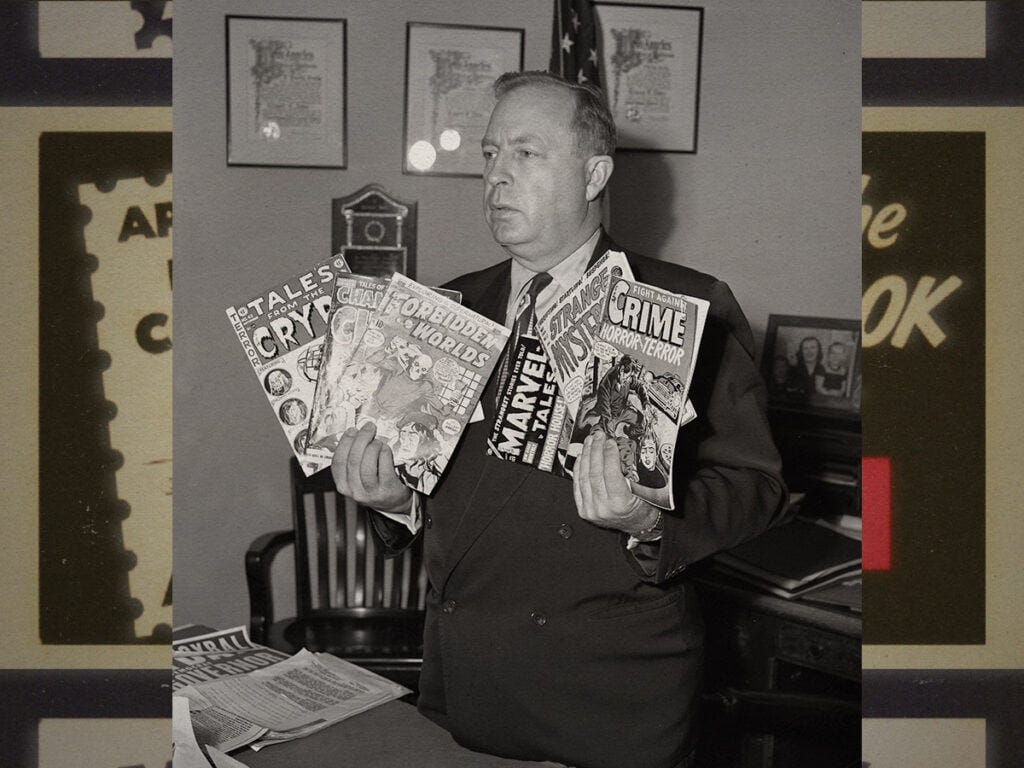
They were seen as cheap tat for kids, so when people looked at the stories seen in horror and romance comics, which were by their nature more adult, people freaked out. Feeling that their kids were being fed impure entertainment that was corrupting them and causing delinquency. This backlash culminated in one of the worst things to ever happen to comics, Fredric Wertham’s 1954 fear-mongering screed, The Seduction of the Innocents. A tome which basically spread a whole bunch of insane lies about what comics actually featured and put the rise in juvenile crime squarely at the feet of comics.
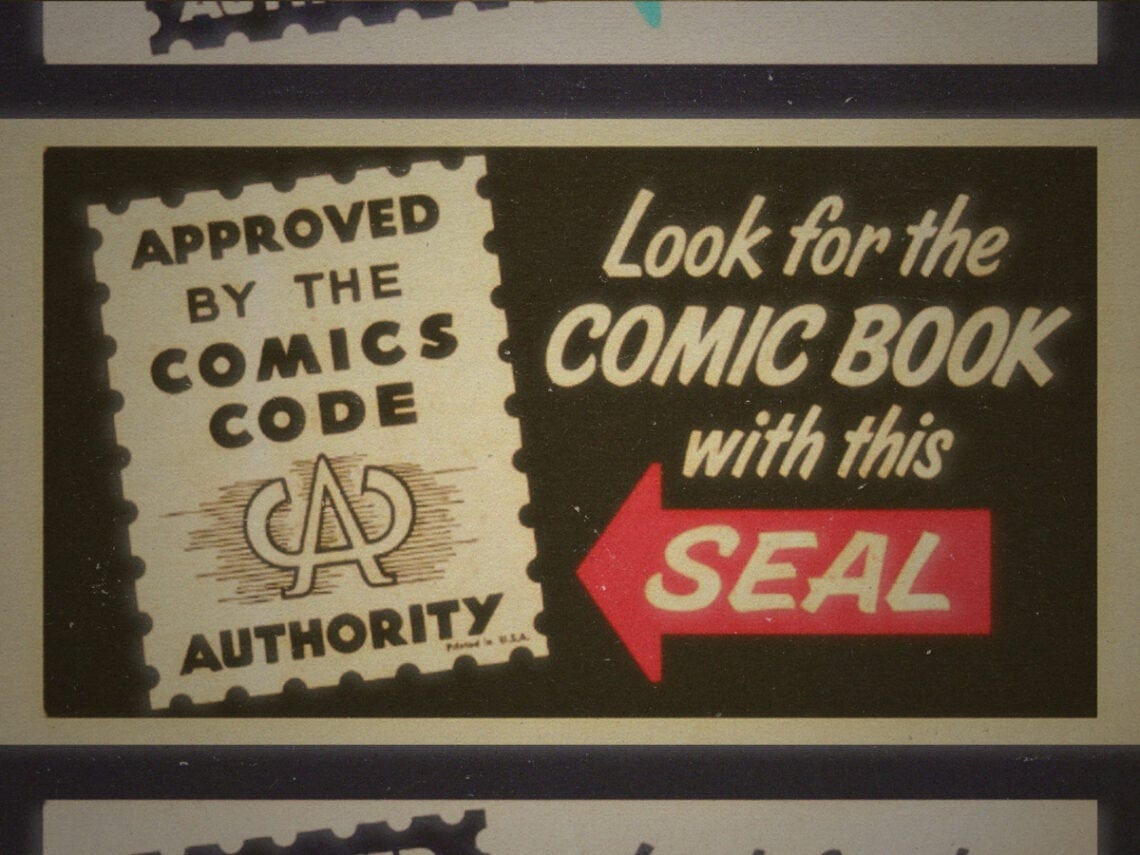
People bought it hook, line and sinker. Comics companies were being brought in front of Senate hearings to be “held accountable” and the result was the creation of the Comics Code Authority. If you’re wondering why American comics only seem to consist of superheroes, the CCA is the reason why. Suddenly, the industry could no longer publish anything other than the most milquetoast, family-friendly titles or risk the CCA revoking their license to publish. Thus, everyone went from publishing exciting, challenging genre books to the worst, most establishment-friendly superhero books.
The industry wouldn’t recover until the rise of Marvel comics in the mid-1960s, and even then, it was a shadow of what the industry was two decades earlier. Don’t get me wrong, I love superheroes and always have done. However, there is a part of me that wonders what could have happened if the US had developed a comics culture more similar to Japanese Manga, where all kinds of stories are published to all kinds of audiences. Unfortunately, the CCA managed to stop that from happening, and thus, comics were ghettoised into what they are today, the home of the American superhero.
Not the worst fate imaginable, but it could be so much more.