The Wertham Interview
RBCC #115 (Oct 1974)

What bothered you most about comic book ads?
They were totally manipulative and dishonest. These cynical advertisers were actually preying upon totally gullible children. In order to guard youth against over-concern about typical problems such as skin or figure, and to help when they are plagued by fears of abnormality or ugliness, one must try to make them less self-conscious. Dr. J. Roswell Gallagher points out from his experience that one must assure them that there is no cause for shame. And he warns that one should not even use the word problems in this connection because it "has much too gloomy a sound."
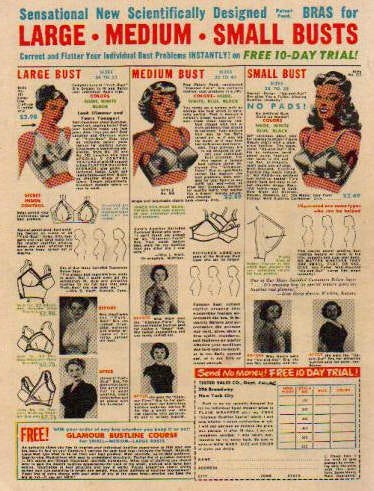
Millions of comic books did exactly the opposite in the 1940s and 1950s. They especially play up these very words which should be avoided. Advertising people tell me that in the profession this is called the "emotional appeal." And that is precisely what it is - ruthlessly playing on the emotions of children. They ask children whether they are not "self-conscious" about one minor or fancied ailment or another, thereby, of course, deliberately making them self-conscious or unhappy. They promise to help them if they are "ashamed" about some little, or perhaps even nonexistent, blemish, thereby, of course, causing them to feel unnecessarily ashamed. They frighten the girls by insinuating to them that they have "problem bosoms." This phrase alone thrown at twelve- or thirteen-year-old little girls is enough to precipitate a severe and distressing hypochondriacal reaction. No wonder they are willing to spend money on all kinds of pills, ointments and gadgets!
Even girls without neurotic trends are apt to be sensitive about their breasts during and before adolescence. Some girls mature earlier than their classmates and go through agonies because they fear they are conspicuous. The opposite may of course occur, too. There are all kinds of folklore superstitions that the growth and shape of the breasts has something to do with past or future sexual life. Usually it is difficult for a woman, and much more so for an adolescent girl, to tell even a doctor about such secret preoccupations. A genuine sexual hypochondriasis may center around the breasts in very young girls, with anxiety, fear dreams, preoccupation with sex and guilt feelings.
What's the big idea behind The Hookey Club?
The name Hookey Club started in this way. I was confronted with several children one day who were truants. While interviewing them as a group, they began questioning one another. This went so well that I asked them to return in a group. Little by little, whenever children with truancy problems came, my assistants would feed them into the group- therapy class. Once, before one of the weekly meetings, I said to a social worker, "I see the Hookey Club is coming in today." She laughed and repeated the remark, and the name stuck.
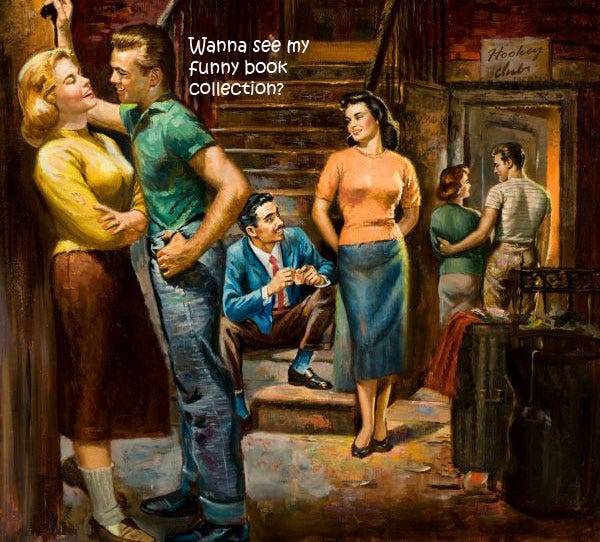
The Hookey Club developed into a regular institution. The sessions were strictly secret, with only myself and usually a stenographer present. All details remained confidential. At each session the case of one boy or girl or some general topic on someone's mind was discussed. One child functioned as chairman to maintain order. Every boy or girl at the session could question the child whose case was taken up. And everyone could express his opinion about the case. Among the children were always some experts in various forms of delinquency who questioned the child who was up for discussion. Whatever a child might have learned from comic books for the commission of a delinquent act, the group never accepted that as an excuse. Nor did any child ever spontaneously bring it up as an excuse.
Working with the community in Harlem obviously made you more aware of systemic racism. What did you find in comics?
In many comic books dark-skinned people are depicted in rapelike situations with white girls. One picture, showing a girl nailed by her wrists to trees with blood flowing from the wounds, might be taken straight from an illustrated edition of the Marquis de Sade.
In another specimen the editorial viciousness is carried to the extreme of showing a white girl being overpowered by dark-skinned people who have tails. In another comic book the hero throws bombs and a Negro from his airplane. A picture shows the bombs and the Negro in mid-air while the hero calls out: BOMBS AND BUMS AWAY!
One of the most significant and deeply resented manifestations of race prejudice in the mores of the United States is the fact that in books, movies and magazines photographs of white women with bared breasts are taboo, while the same pictures of colored girls are permitted.
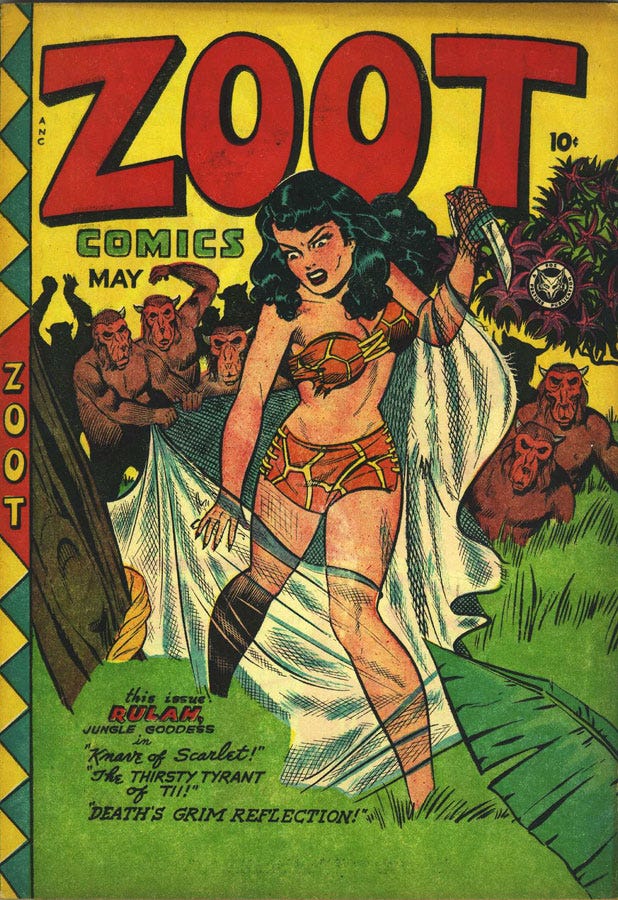
So-called Golden Age comics made a similar distinction. One such specimen had half-nude girls in all kinds of suggestive positions. Other pictures show typical whipping and flagellation scenes such as are found, outside of this children's literature, only in pornographic books. When the girls are white, there is always some covering of the breasts.
EDITOR’S NOTE
The racist imagery is obvious and deliberate. It permeates the popular culture of the 1920s, 1930s, 1940s... even the 1950s, when it came to television. You didn't have to be a white supremacist to indulge in this racism. Significantly, the film director Quentin Tarentino has popularized The King Kong Conjecture. Is it a metaphor for America's fear of the black male? To him that's obvious. All right? So I mean that was one of the first things he said when he was talking to a friend after he saw Peter Jackson's version of King Kong. And he said, you know, are the racial metaphors in there? Is the racial subtext in there? And his friend said no. And he replied: Well then that's just a story of a big monkey.
Were you surprised to see your "Gay Batman" hypothesis take the world by storm?
That was too obvious. One young homosexual during psychotherapy brought us a copy of Detective Comics, with a Batman story. He pointed out a picture of "The Home of Bruce and Dick" - a house beautifully landscaped, warmly lighted and showing the devoted pair side by side, looking out a picture window. When he was eight this boy had realized from fantasies about comic book pictures that he was aroused by men.
A boy of thirteen was treated by me in the Clinic while he was on several years' probation. He and a companion had forced a boy of eight, threatening him with a knife, to undress and carry out sexual practices with them. Like many other homo-erotically inclined children, he was a special devotee of Batman:
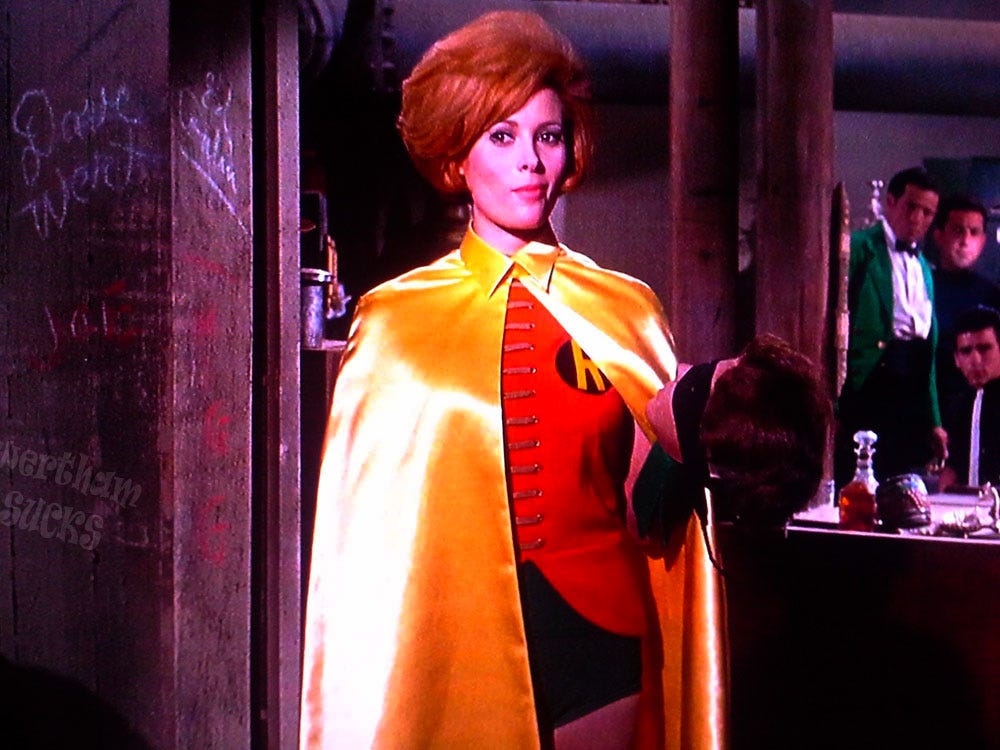
"Sometimes I read them over and over again. They show off a lot. I don't remember Batman's name, but the boy's name is Robin. They live together. It could be that Batman did something with Robin like I did with the younger boy. . . . Batman could have saved this boy's life. Robin looks something like a girl. He has only trunks on."
You were rather instrumental in creating the conditions that led to the development of the code.
Look, I am a psychiatrist. I primarily work in mental hygiene clinics, outpatients departments...usually in free ones. I was the director of the mental hygiene clinic in Hopkins. I was the director of the biggest mental hygiene clinic in the United States, at Bellevue Hospital in New York, and I founded the first integrated psychiatric clinic in the ghetto area, Harlem, in New York. This is by way of background, how I got into this, you see.
Now I'm not primarily interested in comic books, but I am interested in people. And it turned out, in these clinics, many of our patients were young people. This goes back to the middle '40s. Now, in the course of examining these kids, I saw all kinds of troubled young people. They were not necessarily delinquents, they were not necessarily sick, but they had learning difficulties or home difficulties or reading difficulties and so on. My point of view in psychiatry is that one cannot help a person unless one knows the circumstances in which he lives, in detail.... it was brought to me by these kids that outside influences have an enormous influence, namely the mass media. And we found out that quite a number of these kids had these comic books sticking out of their pockets. My assistants started drawing my attention to this.
We found, for instance, that among the many different factors that affected a child, the depiction of crime, of violence, of murder, of rape, of explosion, of destruction... has an effect on them. Now, I was very much interested in violence. I've studied violence and I have written several books about it, I've testified in court, I've lectured police departments. In the course of that we came to the conclusion that this has an effect on children.
Now I never said, and I don't think it is so, that a child reads a comic book and then goes out and beats up his sister or commits a holdup.
You were not maintaining that there was a clear-cut cause and effect relationship?
You see, in human life, in psychological life, it isn't so that you can say one factor has a clear causal effect on anything else. It's not like a billiard ball hitting a billiard ball. This is a web of circumstances... any factor that is detrimental is only so in connection with other factors.
It isn't so that the comic book - or whatever it is, the movies, etc - alone does it. All I think, it has an effect.
Then your conclusions have been misrepresented all these years.
Oh sure. Oh, yeah. But I mean, look, this is an industry that... I had no idea at that time that I was doing any harm to the industry. I give you an example: If I am interested in air pollution, it doesn't mean I'm interested in a specific factory. I was just saying that these outside influences have a definite influence. And I can give you in one word what this influence is: It desensitizes these kids. There not sensitive anymore to human suffering, they become hardened.
Regardless of what your intentions were, Doctor, I think it would be fair to say that your book had an explosive effect on both the industry and the social order.
Yeah, well, that's true. It had an enormous number of reviews and so on. But the point is, you know what the effect was primarily: that for the first time these parents looked at these comic books themselves. You know, I also thought that comic books were filled with rabbits and animals and nice fairy stories. But then I read them and I thought... why,these girls have needles stuck in their eyes, and baseball games are played with the human head, and, and crimes are depicted, and blood flows... I didn't know that, you see.
So then the kids came to us and we made a very extensive scientific study by... a child would tell us his dream, and he uses as his excuse... and we say, well, what about these comic books? And he says, well, I bring them to you. So he brought them to us and we got this enormous collection of comic books.
And I predicted then that, since violence is connected with so many other things, that more and more young children will commit violence.
I said that in 1947. Now at that time it was, ach, that's ridiculous, a boy of fourteen to commit murder, it was absolutely unknown. I had never seen a murderer of fourteen. Nowadays you speak to a police department and they suspect the fifteen, sixteen, fourteen year old boys. Absolutely. What I predicted then has not only come true, but absolutely true. But in those days it was unheard of. Well, I based it not specifically on comic books - I never did - but on all the mass media.
Now, I had in the beginning no idea of advocating any methods whatever; I regarded it just from the point of view of treating people, as a scientific... but then I got so much objection and so much criticism and so much attack, you see... I tell you what happened: when my book came out I found out that I was being followed by detectives. There were two detectives who spent about six weeks; they asked everyone who knew me, asked my friends and they even went to my patients, and they asked: What is Dr. Wertham's sex life, does he like girls, does he like boys, what car does he drive, does he pay his taxes, does he drink? It was very funny.
Now, I had no intention of suggesting any methods; but finally, when I was asked off and on by responsible people, what do you really suggest should be done, then I made a suggestion. And this is very important: it had absolutely nothing to do with the Code. I suggested that children the age of thirteen or under, that comic books... I never spoke of comic books, I only spoke of crime comic books. That is very important, because there are of course good comic books. But a crime is a crime; if you kill a girl, it's a crime. So I had the category of crime comic books.
And all I said was that children of thirteen should not... that comic books should not be directly displayed to them. That's all. In other words, it should not be that a boy of twelve goes into a store and sits there and sees all these things. I said they should not be directly displayed to the child.
Now if the papa or the mama goes to the store and says, "Please, have you any comic books? I want to show them how you can kill a girl. They only know how to strangle them and I want to show them that you can stab them from the back, or you can take their liver out. Have you got a comic book?"
And he says, "Yes, sure." Well, they can buy it, you know? I didn't want any censorship for adults. They can do what they want. But the child itself...
Of course you have been closely identified with censorship over the years.
Well, I tell you this: This was partly a deliberate misrepresentation. The comic book industry, apart from following me with detectives... I'm afraid my life wasn't interesting enough. I didn't have any Argentinian firecrackers jumping out of my car. They didn't find enough... you know, I'm almost ashamed. But one of the biggest public relation firms in the country had the task of making all these things up deliberately.
Your critics include the current administrator of the Code, who declares that there was absolutely no cause and effect ever demonstrated between comics and aberrant juvenile behavior. I wonder, are you still convinced of the legitimacy of your theories, have you revised or...
I am much more convinced. Look, all these things... I mean, I have nothing to do with the Code, I don't know the administrator... but the point is, to say that, that's a very, very serious thing. You know, cause-and-effect is a big word. Look, a patient comes to me and he has a headache, yes? Now shall I wait till I only find out a strict, absolute cause and effect or shall I find out if he smokes too much or drinks too much? I mean, I think of all these factors. Lots of people are exposed to... comic books are now a minor problem. They're not so important any more. The important media now are television and movies. And the movies are, of course, filled with violence. Filled. I mean, this Peckinpah movie, Bring Me the Head of Alfredo Garcia, twenty-one people are killed in that.
Now, the question of cause and effect. Let's discuss that. What is cause? A cause means anything that has an influence on people. The mass media, they obviously have an influence, for good or for bad. And if you show a lot of violence then finally people get used to it and the results are... after all, the violence among young people is tremendously increased. And why should that happen? There must be some influence. And I say that mass media are one, one of the most important factors. And the people say there is no cause and effect? That seems to me to be utterly unscientific. How can anyone be a psychiatrist and not realize that people get affected by things?
There is one other thing they say about me, that I am for censorship. You've heard that, probably.
Well, yeah...
Now, I am the first psychiatrist in the United States who was admitted to a federal court as an expert witness against censorship. I've defended nudist magazines, I've always been on the other side of censorship. There has not been one case where I have been for censorship.
Then you feel you've been subjected to character assassination all these years?
That's a mild expression. Yes. Look, don't get me wrong, I'm not in any way bitter. I think it's quite funny. You know, I've been accused of practically everything except lesbianism. They never accused me of that. How they missed that I don't know.
What are your current professional circumstances, especially with regard to comics? You had been involved in a study of fanzines...
My professional circumstances are primarily psychiatry and psychotherapy. I have a big psychotherapy practice. I'm still working on violence. I have nothing to do with comic books anymore, but I'm very much interested in movies. Yes, I tell you what happened with fanzines. People sent them to me and I got interested... and I got a very interesting collection of these amateur magazines. These are magazines that, to my mind, are very important, although nobody pays attention to them. In the sense that they are completely free from censorship. These are magazines that a young man gets out by himself, nobody interferes with it, he sends it to people who want it. Outside the profit motive. So I collected them. You see, I am interested in communication because that has to do with violence. Because I think that communication is the opposite of violence. Men who rape, you see, that is the opposite of communication. If he communicated with a girl, you see, he wouldn't have to kill her.
Okay.
So I got interested and finally wrote a book about it - the only book that has ever been written about fanzines. It's published by Southern Illinois University Press. Fanzines are very nice. They don't have any violence. They're quite different. In other words, a man can be a comic book reader... they make me out to be a terrific fanatic. I'm not at all. I mean, there are people who resist that. You see, I believe in human beings. I believe that human beings have an enormous resistance and there are many of them who resisted these bad influences. They ask me to write for them. I've written for a number of fanzines, because I'm PRAISING them, you see. There has been a rumour around that I'm against fanzines, I'm against everything. The point is that I've discovered fanzines and I think they're absolutely very important and they give me a very good feeling about young people today.
I had wondered to what extent you were still involved with studying comics because I was curious what your professional opinion is of the comic material today, twenty years after the code was adopted.
Two things have to be said. In the first place, I can't talk. You see, when I spoke about comic books in those days, I knew... I mean, these kids brought me all their comic books and the crime comic books that were... there were so many. Now, I haven't got such a complete overview. My impression is that the worst kinds of things... I don't think you see anybody any more sticking a needle in a girl's eye. You don't see any where they play with human intestines. See, the interesting thing is... These atrocities. I was the first. I was the only one who pointed it out. Nobody had spoken out when I began to speak about it. Nobody. I was all wrong, you see.
The first time I ever spoke about comic books at all I was under oath in Washington D.C., in a case where I was against censorship. That was a very difficult trial before the Post Office in 1947, and I was an expert psychiatrist testifying for the defense. And in cross-examination, the man said to me, in other words, you think all [publications] are all right and nothing is wrong. I said no, I don't think so at all, I have in my briefcase a lot of things that... all right, here, if you want them, here's the evidence. And they were absolutely horrified. Here was blood all over, here was every kind of murder you can think of, here were men who were... their noses were cut off, their eyes were... blood. The judge said, "Doctor, where did you get this kind of [book]?" I said, "Your Honour, I bought these on the corner. You can go right there and buy some too."
I can't tell you all the rotten things they said. They said when a boy is in trouble and he comes to Dr. Wertham's clinic, he's asked, "Do you read comics?" And if he said "Yes, the comic books made me commit a crime," then Dr. Wertham believed that. No single child has ever accused comic books. None. They never said that. WE said it. Look, I don't ask a boy when he has the measles, "Where do you get your measles from?"
If a child goes to a movie, what's he supposed to see? Polanski's Chinatown? Horrible, horrible, blood spurting all over; and of course they think this is...
Real life, yes.
It IS real life. That's the trouble.
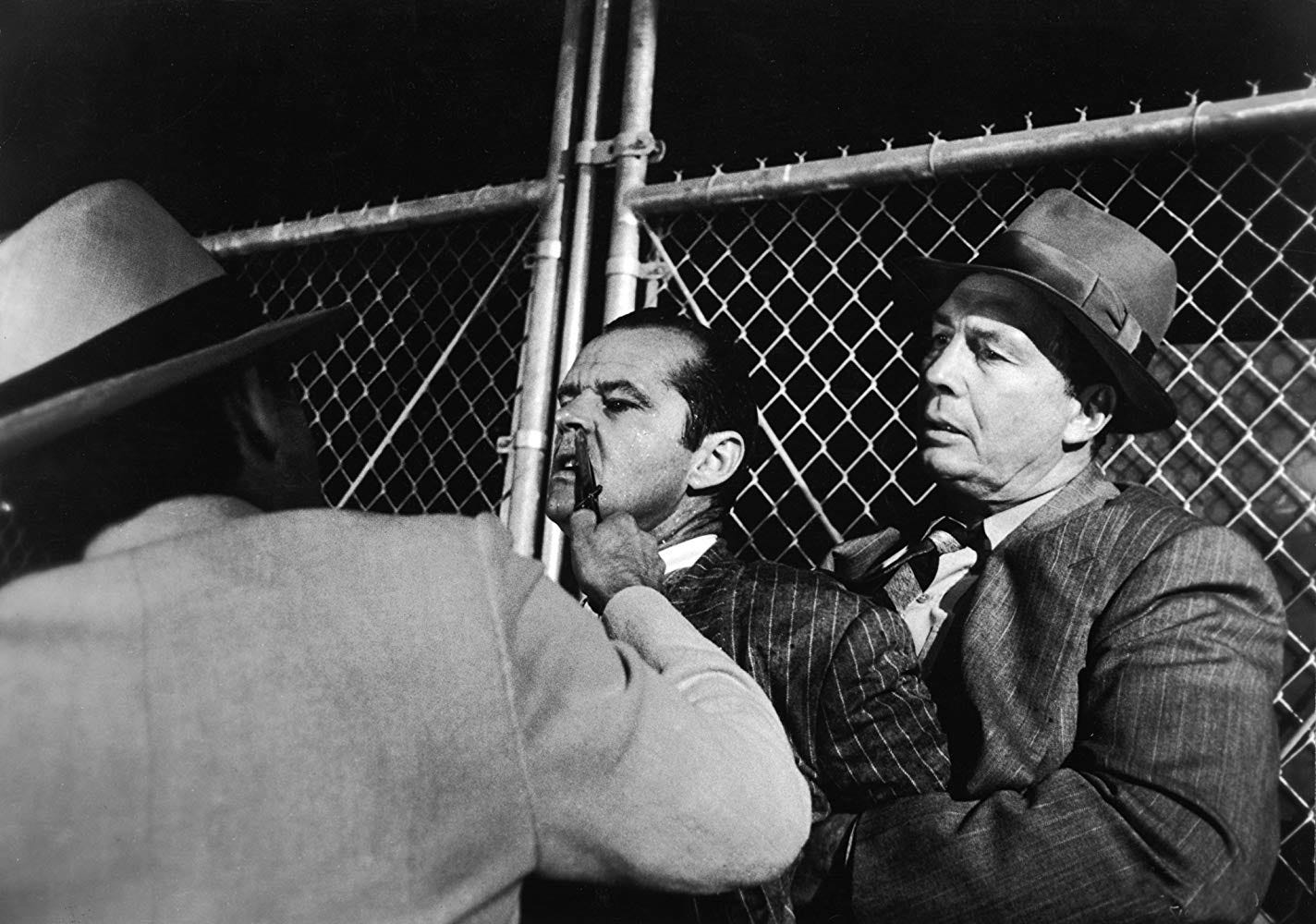
CHINATOWN (1974) rated R
Two murdered bodies are discovered at two different times in the film
(one man and one woman).
A man's nose is slit, blood is shown, but he quickly covers it.
Some fistfights, including characters being beaten up and thrown against walls.
Characters are punched repeatedly in the fistfight scenes.
A woman is slapped many times.
A woman has a black eye implying that her husband struck her.
A man is shot in the arm and slightly injured.
Comics have gained more and more legitimacy in recent years. They've become valuable tools in remedial education. All in all, it's a far cry from the legitimacy level of twenty years ago.
I have to tell you this: That comic books are used in remedial reading and so on, that's completely wrong. They're very bad for reading. That's been very carefully studied. There have been important scientific studies made. They're NOT good for reading. I get letters from comic-oriented people and they're always full of bad spelling.
Comic books are not good for reading because in reading you have to read from left to right. But in a comic book you have these balloons, and they interfere with reading. So for remedial reading it's a very bad thing.
Yes, comics have become legitimate, and I don't think it's a good sign for the cultural state of the nation. It would be better if people read books or newspapers.
Hannah Arendt once proclaimed that the cultural treasures of the past, believed to be dead, are being made to speak, in the course of which it turns out that they propose things altogether different than what had been thought.
The Wertham interview was originally presented in RBCC #115 (Oct 1974). Most sincere thanks to Coop for providing it.